February 18, 2026
Checks that were written a long time ago, often referred to as “stale-dated checks,” continue to be a problem for many businesses. As revenue grows and businesses receive more checks, it is easy for some of those checks to be overlooked, forgotten, or misplaced – to, in effect, “fall by the wayside.”
These older checks can become major issues, especially as transaction volume grows. While one late deposit may seem minor, the cumulative impact can be significant.
There are a number of reasons why checks may become “old.” For example, a business’s check-cashing process itself can be lengthy – opening the mail, logging the payment, approving the payment, and depositing the check – each step increases the risk of delay, and if businesses are not careful and do not maintain strict payroll procedures, checks may sit unprocessed for days, weeks, or even months.
Other factors can also lead to old checks, such as staffing shortages, inconsistent bank deposits, poor payment tracking, payment disputes/questions, and multi-location or remote operations. No matter the reason, the end result for businesses seeking to maximize profits is an older check and a heightened risk of revenue loss.
No business wants to lose revenue, so when an old check is discovered, it can lead to a sense of panic in business staff members and even the owner. Can I still cash the check, or is this check worthless now? Do I need to notify the customer that I’m going to cash their old check? Could I receive a fee if I try to cash an old check and there is a lack of funds?
To ease your mind and give you a clear path forward, let’s take a closer look at old checks in particular and the topic of delayed check deposits in general.
The general rule of thumb is that a check becomes “old” or stale-dated after 180 days (6 months). However, exceeding that date doesn’t automatically mean that the check is invalid. What it does mean is that under US banking rules, a bank is not required to honor any check that is more than 6 months old.
Many banks still accept checks past the 6-month mark. Factors that can determine whether a bank accepts an old check past the 180-day limit include the bank’s internal policy, the check amount, and your specific relationship with the bank. There is also the chance that a bank will cash a check without checking the date printed on it, which will result in the deposit going through as long as the account has the necessary funds.
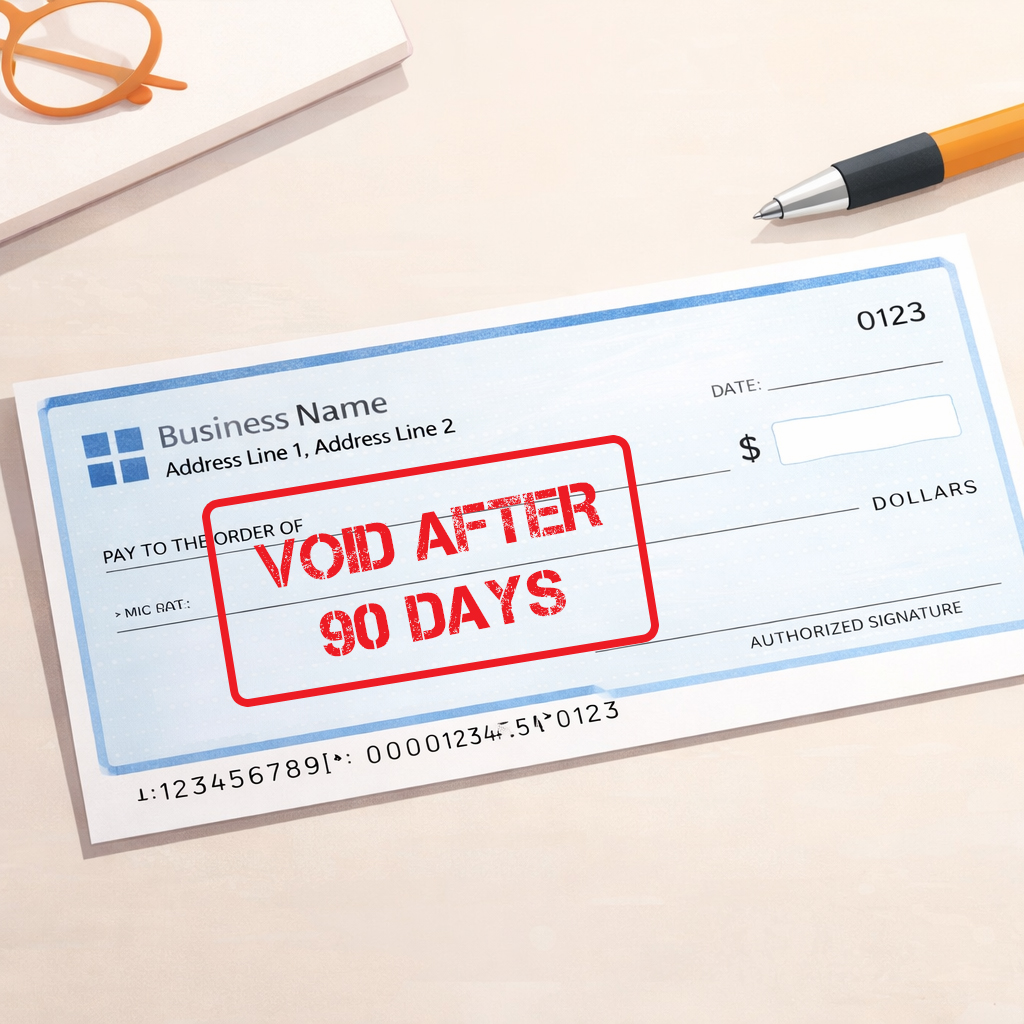
Also, keep in mind that many checks today have printed on them, “Void after 90 days” or another specific time period, such as “60 days” or “180 days.” In these cases, banks usually follow the printed instructions. That means trying to deposit a check after the specifically printed window will result in a rejection – even if the check is under 6 months old.
More factors to consider here include that government checks are treated differently. US Treasury checks, which include tax refunds, Social Security payments, and other federal payments, are valid for 12 months. The validity of state and local government checks is determined by state and local laws and the issuing agency. Finally, certified checks and money orders generally don't have strict expiration dates like personal checks (6 months), but they can become stale, incur fees, or be turned over as abandoned property after a period. In addition, cashier's checks sometimes have specific "void after" dates from the issuer, so cashing them promptly is always best to retain full value.
Today’s bank regulations concerning stale checks are largely based on the Uniform Commercial Code (UCC) § 4-404 (UCC) and state that banks aren't obligated to pay checks more than six months (180 days) old, but they can choose to honor them in good faith.
Because of the “gray area” created by banking regulations, many banks choose to implement their own policies regarding stale-dated checks. To avoid coming into conflict with these policies and incurring fees, business owners should always strive to cash checks promptly.
Unfortunately, the answer to this question is “yes.” For business owners, this is a real and fairly common cost. The bank may charge a returned deposit item fee. While they usually charge the check writer, the issue still results in a return to you – and your bank’s fee still applies.
On top of an additional fee, trying to cash an old check can lead to other unwanted issues, such as reversal of funds, delays in cash flow, accounting discrepancies, and extra admin time tracking the payment and ultimately its reissuance.
For all of these reasons, it is typically the best policy for businesses to request check reissuance for any checks that are older than 90 days. To avoid the issue happening again in the future, it is important for businesses to institute a detailed check-cashing process.
Yes, when dealing with old checks, the likelihood that an account has been closed, moved, or changed is significant. It's common for individuals and businesses to close bank accounts over time due to inactivity, moving, bankruptcy, or death of the account holder.
Also, the person or business that wrote the check may have spent the money or may simply not be expecting the check to be cashed at such a late date, which can lead to insufficient funds and a bounced check. One more thing: for very old, uncashed checks (these are typically checks that are at least 3-5 years old with no activity), the funds may have been turned over to the state as unclaimed property under escheatment laws, which will further complicate the whole check-cashing process.
The best way to deal with old checks is to prevent them from occurring in the first place – that means creating a comprehensive check-cashing procedure to ensure checks are handled promptly.
Businesses that treat check deposits as time-sensitive reduce revenue loss, improve cash flow reliability, and also create a more professional – and successful – operation. With that in mind, here are some procedures that can help you prevent stale-dated checks:
Don’t forget about those old checks your business has written that no one’s cashed yet! These little stragglers can make your bank statement a puzzle, and if one finally gets cashed after months, it might surprise you with a smaller-than-expected balance.
Here’s an easy fix: ask your check supplier to put “VOID AFTER 60 DAYS” right on your checks. That way, if someone tries to cash it months later and there’s not enough funds in your account, your bank should refund any fees tied to that check. It’s a simple way to save yourself some hassle down the road.
Stale checks not only increase the risk of nonpayment due to the customer’s account having insufficient funds, the customer having closed their account, or the customer having stopped payment … it also increases your risk of receiving unwanted fees and experiencing cash flow problems.
That’s a double whammy no business wants to go through. That is why it is vital for businesses to deposit all checks right away and to request a new copy for any check older than 90 days.
Taking these actions consistently will help you avoid cash flow gaps and reduce the risk of non-payment. You may also save time and administrative effort by preventing accounting errors.
For business owners, understanding the facts around stale dated checks allows for greater financial control over revenue and cash flow predictability . Having greater control over these factors will then enable your business to operate more efficiently and to scale much more easily and safely.