October 28, 2026
A check can look completely normal and still be fake. The numbers match, the signature is there, and the bank name printed across the top is real. Days or weeks later, the bank reverses it, and by then whatever was sent in exchange for it is already gone.
This isn't rare, and it isn't usually a case of someone being careless. Fake checks have gotten harder to spot on sight, which makes it worth knowing exactly what to look for and what to do if something feels off.
Most people have learned to be cautious of suspicious links or texts claiming to be from their bank. Far fewer are equally cautious about a paper check with a real-looking routing number and a familiar logo.
Timing plays a role too. Banks are required to make part of a deposited check available quickly, often the next business day for a portion of it, even though the check itself can take longer to fully clear. Fraud exploits that gap: the deposit shows as available before the bank has actually confirmed the check is good, and by the time it bounces, the funds behind it have already been spent or withdrawn.
A 2024 Abrigo survey found that 17% of fraud victims had dealt with check fraud specifically, and 60% of the small businesses affected were hit more than once. Separately, the American Bankers Association's Deposit Account Fraud Survey found that in 2018, check fraud accounted for 47% of all dollar losses tied to deposit account fraud, the single largest category it tracked.
A quick physical check is often enough to catch a fake before you ever deposit it.
Real checks are printed on heavier stock than a typical home printer produces, and most are torn from a pad with at least one rough edge rather than four clean, factory-cut sides. The MICR line, the string of numbers along the bottom, is worth a close look, though not for the ink itself; magnetic ink isn't something you can identify by sight. What you can check: the check number printed in the MICR line should match the check number printed elsewhere on the check, the routing number should match the issuing bank, and the digits should be crisp, evenly spaced, and properly aligned rather than smudged, crooked, or uneven.
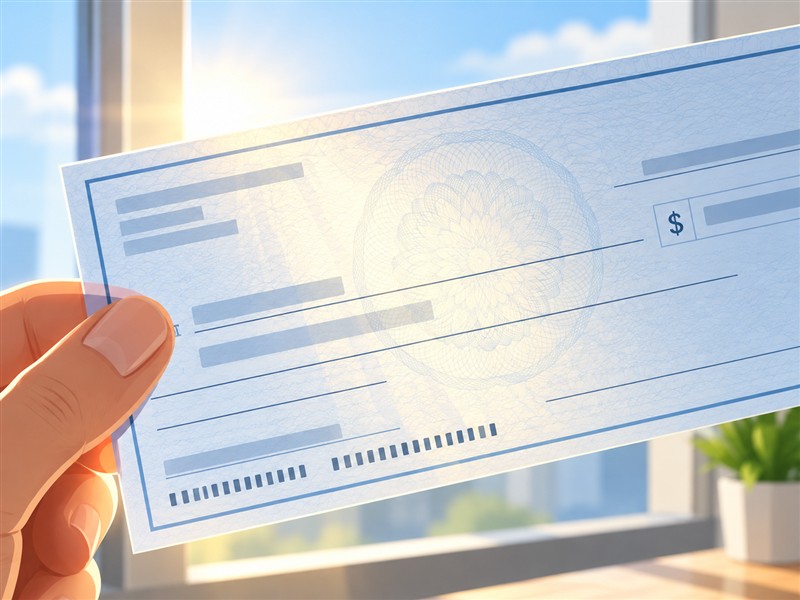
Hold the check up to light to check for a watermark, and look for a void pantograph, a background pattern that reveals a hidden "VOID" if the check has been scanned or copied. Calling the bank the check claims to be from, or checking the routing number against the Federal Reserve's own routing number directory, takes only a couple of minutes and settles most doubts. Suspiciously round or padded amounts are common in overpayment scams, and mismatched fonts between the payee line and the amount box are a sign the check was assembled rather than printed as one document.
For a full breakdown of what each part of a check is for, see our guide to the components of a check.
These get lumped together, but they're different problems. A counterfeit check is built from nothing, usually a scanned image and the right paper stock run through a printer. A washed check started out as a real one: someone stole it, typically from a mailbox, used a solvent to lift the ink from the payee line and amount while leaving the signature intact, then filled in whatever name and amount they wanted.
Mail theft is the main driver behind check washing specifically. Financial institutions filed reports on more than $688 million in suspicious activity tied to mail theft-related check fraud over a recent six-month period, according to FinCEN's own analysis, and roughly 44% of those stolen checks were altered and deposited rather than used as counterfeit templates or forged outright. Checks built with chemically reactive paper, the kind used in Tech Checks' SecuDocs and Holographic security tiers, discolor visibly the moment someone tries a solvent-based wash, which removes most of the incentive to steal them in the first place. The U.S. Postal Inspection Service also recommends dropping outgoing mail at a collection point close to pickup time rather than leaving it in a mailbox overnight, since collection boxes and unattended mailboxes are the primary source of stolen checks.
The FTC's guidance on fake check scams covers many variations, but three come up constantly. In an overpayment scam, a buyer sends a check for more than the agreed price and asks for the difference back by wire or gift card; the check bounces after the refund has already gone out. In a job scam, a "new hire" is mailed a check to cover equipment and told to forward part of it to a vendor that doesn't exist. In a rental scam, a prospective tenant sends a security deposit check for more than what's owed and asks the landlord to refund the difference before the original check has fully cleared; the landlord sends the refund, and the tenant's check bounces days later.
What connects all three is urgency. Every version depends on the target moving money before the fake check has time to bounce.
If you're holding a check made out to you and something feels off, don't spend any part of it, even the portion your account shows as available. Call your own bank's fraud line rather than any number printed on the check, and call the issuing bank directly using its publicly listed number to verify the check independently. Report it to local police, and to the U.S. Postal Inspection Service if it arrived by mail or you suspect washing. Filing a complaint with the FTC at ReportFraud.ftc.gov feeds law enforcement databases even when it doesn't resolve your individual case. Keep the check itself, the envelope, and any messages tied to the transaction, since all of it counts as evidence.
Two different situations fall under this, and they don't resolve the same way. If you deposited a check that turned out to be fake and your bank later reversed it after the funds briefly showed as available, that loss is generally yours to absorb unless you can recover the money from whoever gave you the check. Depositing an unverified check is a risk the depositor takes on, not the bank.
If instead someone stole and altered a check that you wrote on your own account, the outcome is different. Under the Uniform Commercial Code, liability for a forged or altered check typically falls on the bank that paid it rather than the account holder, provided the fraud is reported promptly and the account holder wasn't negligent, such as signing a check and leaving the amount blank. How long you have to report it depends on your account agreement. The UCC allows up to a year in some cases, but many banks shorten that window considerably, especially on business accounts, so check your agreement and don't assume you have time. Report it in writing as soon as you notice, ask for a fraud affidavit if your bank provides one, and follow up until it's resolved. Our own guide to who pays for check fraud losses covers this in more detail.
Fake checks come from both directions: the ones handed to you and the ones you mail out. Treat an unfamiliar incoming check with the same caution as an unfamiliar email attachment. For outgoing checks, the paper and security features you're printing on do most of the defending. A void pantograph and a properly printed MICR line come standard on any check from a reputable printer. Chemically reactive paper goes a step further against washing specifically, and it's available through Tech Checks' SecuDocs and Holographic tiers.
For businesses writing a large volume of checks, Positive Pay is worth asking a bank about. It matches every check presented for payment against a list of checks the business has actually issued, and flags anything that doesn't match before it clears rather than after.
Are cashier's checks safer than personal checks?
Generally, since the issuing bank guarantees them, but they can still be counterfeited. Call the issuing bank directly to verify one if the amount is significant.
Why did funds show as available before the check fully cleared?
Federal rules require banks to release part of a deposit within a set window, even though full clearing runs on a separate, often slower timeline. Available doesn't mean cleared.
What's the difference between washing and forgery?
Washing alters a real, signed check. Forgery means the signature itself was never authorized in the first place.
Is Positive Pay worth the cost for a small business?
For a business writing more than a handful of checks a month, most banks and finance teams consider it worth the added fee, since it catches altered and counterfeit checks before they clear rather than after.